
Glycan analysis for research and biopharmaceutical development
Understand which sugars are present in your samples, how they are connected, and where they attach to proteins.
Protea Glycosciences provides glycan analysis, glycoproteomics, and analytical consulting for academic and industry projects. Based in Wollongong, Australia, we work with clients in Australia and internationally.
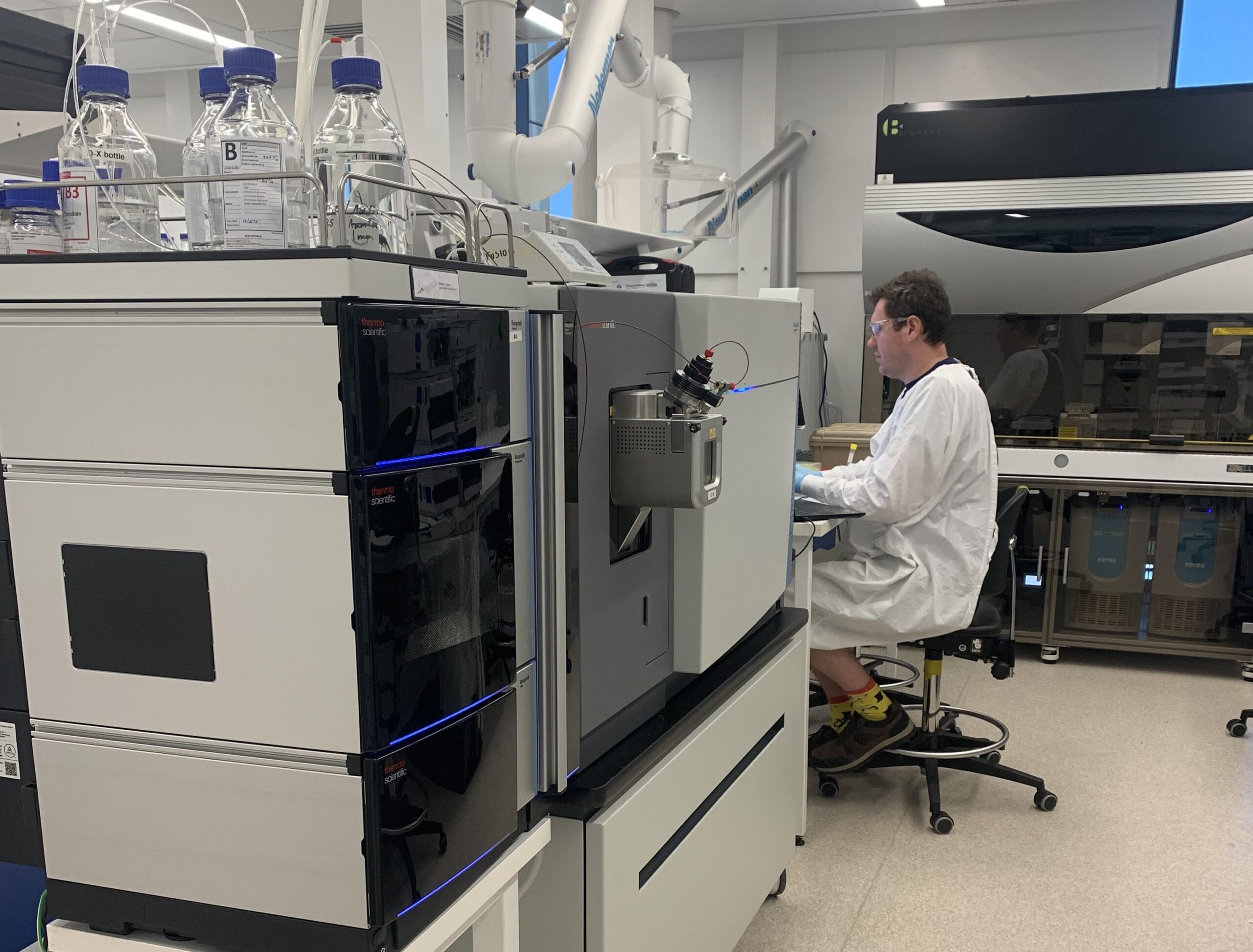
All analytical data is acquired at Sydney Mass Spectrometry (SydneyMS), a core research facility at the University of Sydney.
Compare glycan profiles
Investigate differences between samples, experimental conditions, or production batches. We offer separate N-glycan and O-glycan workflows, alongside analysis of glycans released from glycosphingolipids and free oligosaccharides.
Understand protein glycosylation
Identify glycosylation sites, measure site occupancy, and investigate the glycan compositions present at individual sites. We use separate experiments for occupancy and site-specific glycoform profiling so each measurement addresses a clear question.
Characterise unusual glycans and sugars
Look beyond a conventional monosaccharide panel. Our platform supports investigation of unusual and modified sugars, with examples including O-methylated galactose in marine molluscs, O-acetylated sialic acids in camel milk, and phosphorylated N-glycans
produced by fungal expression systems.
Develop or improve an assay
Get help with mass spectrometry methods, acquisition control during an instrument run, and bioinformatics. We also help biopharmaceutical teams evaluate glycosylation patterns for initial CMC submissions and investigate batch-to-batch variation.
Glycans in context
A sample can be glycosylation in a variety of ways: attached to proteins, attached to lipids, and free oligosaccharides. The same monosaccharide composition can be arranged in different wayss, so understanding the source and structure of a glycan matters.
Our workflows address these different glycan classes. We can help you decide which analyses will answer your question and whether examining several classes would add useful information.
From an initial characterisation study to an investigation of batch variation, we help teams select and interpret glycosylation measurements. Projects can draw on site occupancy, site-specific glycoform profiling, released glycan analysis, and monosaccharide analysis.
The people and research behind Protea
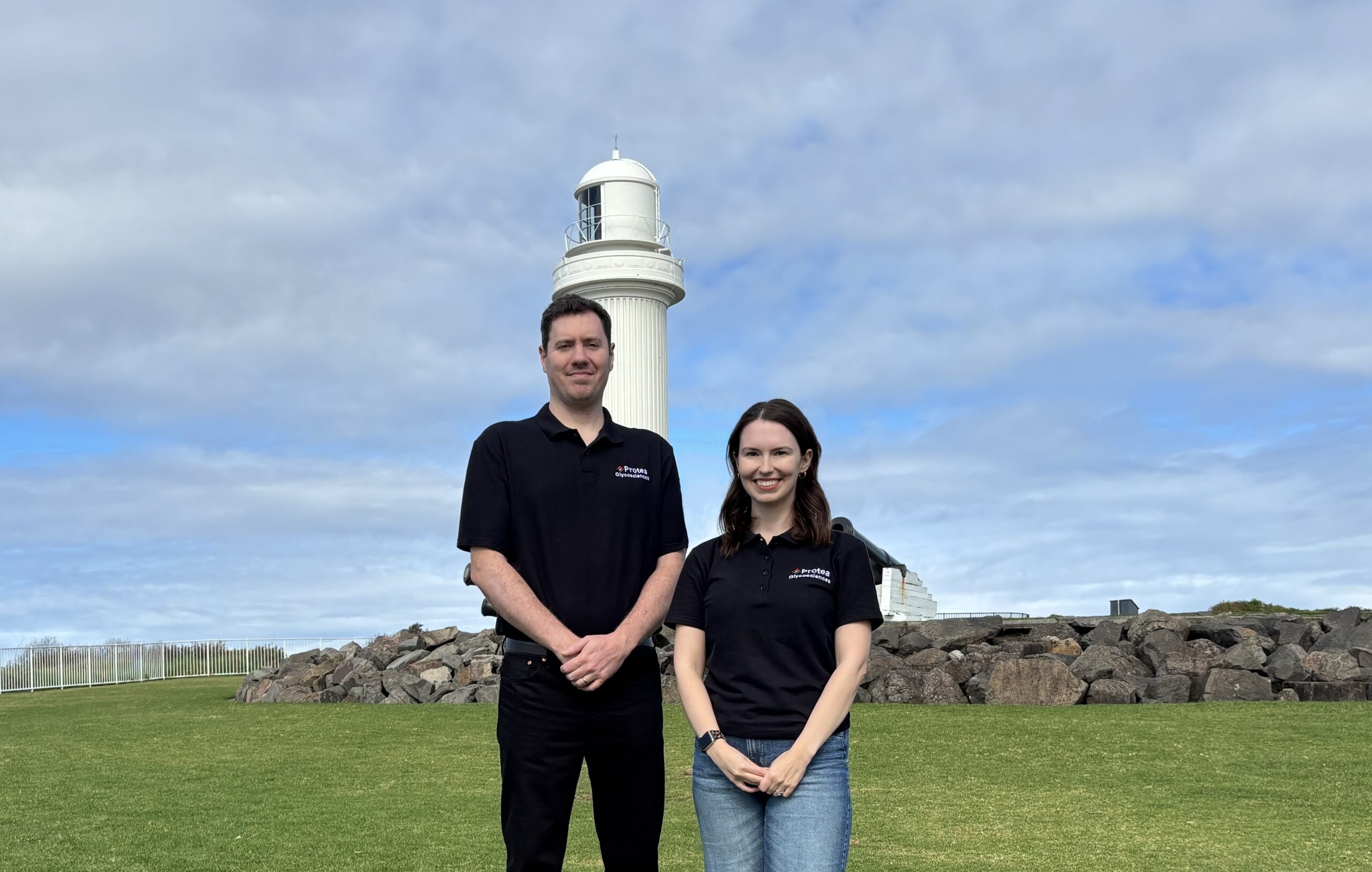
Protea was established in 2023 by Christopher Ashwood, PhD, following his role as Glycomics Core Director at the Harvard Center for Glycoscience in Boston. Our work includes analytical services, method development, standards manufacturing, and published research. Maia Kelly, PhD, is our Lead Software Developer and leads development of GlyCombo, our open-source algorithm for high throughput glycomics, as well as our in-house bioinformatic pipeline.
Both Maia and Chris contribute to the mass spectrometry community through training and committees. Chris has contributed to Skyline Online since 2020 and has served as its small molecule course convenor since 2022. Maia’s service includes previously chairing the FeMS Awards Committee and as a member of the US HUPO Early Career Researcher Committee. We also attend scientific conferences each year to present our advances and keep up with the research community.
Standards for laboratories doing their own glycomics
Our forthcoming six-sample benchmark set reflects the complexity of plasma and serum glycomics experiments. Supplied as released glycans, it supports relative-response comparisons between analytical workflows, with additional uses in routine QC and LC–MS installation performance checks.
Standard analysis is as simple as: resuspend, inject, and compare.